
Ecommerce Strategy for Businesses That Already Sell Offline
Your ecommerce store should be closing deals while your sales team sleeps. But if you already have a sales team, distributors, or a physical presence, most ecommerce strategy guides aren’t written for you.
Book a ChatThey’re written for someone starting from nothing. A solo founder setting up their first Shopify store. A side hustle going full-time.
That’s not your situation.
You have revenue. You have customers. You might have a warehouse, a phone that rings, and a sales rep who’s been with you for 12 years. The question isn’t “should we sell online?” The question is “how do we sell online without breaking what already works?”
If your sales team spends half their day answering “Is it in stock?” and “What’s my trade price?” instead of actually selling, this guide is especially for you. If orders still arrive by email or fax and someone on your team re-types every one into the system by hand, keep reading.
This guide is for that second question.
What Is an Ecommerce Strategy (And Why Yours Is Different)
The textbook definition
An ecommerce strategy is a plan for how a business sells products or services online. It covers everything from which products go online, to how customers find you, to what happens after they click “buy.”
That definition’s right. But it’s incomplete.
Most ecommerce strategy guides stop there. They walk you through setting up a store, choosing a platform, writing product descriptions, and running your first Facebook ad. Useful if you’re starting from zero.
Not useful if you already have a business that works.
Why most ecommerce strategy guides miss the mark
If you already have a sales team, trade accounts, or a retail presence, your ecommerce marketing strategy has different problems and different goals.
You’re not trying to work out whether people want what you sell. You already know they do. You’re not trying to get your first sale. You’re trying to add an online channel without cannibalising the sales you already make.
Ecommerce isn’t a replacement for your sales process. It’s an extension of it.
The challenge isn’t the technology. It’s the alignment. How does the online store sit alongside the people, processes, and relationships that already generate your revenue?
That’s the question this guide answers.
The Real Challenge: Ecommerce Alongside an Existing Sales Operation
This is the part that catches most businesses off guard. And it’s the section that matters most if you have an established business.
Channel conflict: when your online store competes with your sales reps
Here’s the scenario. You launch an online store. A customer who normally calls your sales rep places an order through the website instead. Your sales rep just lost a commission on a deal they would have closed anyway.
Now multiply that across the team. Within weeks, your sales reps aren’t fans of the new store. They start telling customers to call them directly instead of ordering online. They might even undercut the website pricing in negotiations.
This is channel conflict. It’s the number one reason ecommerce underperforms in established businesses. Not bad product photos. Not slow load times. Internal tension.
The online store and the sales team start competing with each other instead of competing with your actual competitors.
If you don’t plan for this before you launch, you’ll spend months trying to fix it after.
The operational drag nobody talks about
And while your sales team’s dealing with channel conflict, there’s another problem eating hours every week. Orders coming in by email, phone, or fax, then someone on your team re-typing every single one into the system by hand. That’s slow, it’s error-prone, and it’s tying up people who should be doing higher-value work.
A properly set up online store with the right integrations means the order goes straight into your system. No re-keying. No transcription errors. No chasing up illegible fax orders.
Getting your sales team to see ecommerce as an asset, not a threat
The fix isn’t a motivational speech. It’s a structural decision.
Position ecommerce as the tool that handles the work your sales team doesn’t want to do. Repeat orders. Small orders. After-hours enquiries. Interstate customers who aren’t worth a site visit.
Here’s what works:
- Ecommerce as lead generation. The online store captures enquiries from new customers your sales team has never spoken to. The rep gets the lead and the relationship. The store opened the door.
- Shared attribution. If a customer orders online but has an assigned rep, the rep still gets credit. This removes the “online stole my sale” problem.
- Reorder automation. Customers who buy the same products every month can reorder online at 2am. Your sales reps are freed up to chase new business instead of processing paperwork.
Set the online store up as an assistant for the sales team, not a replacement. The best reps will see it quickly. They get to spend their time on high-value conversations instead of chasing repeat orders.
What “ecommerce performing” actually means when you already have revenue
When a startup launches an online store, success is simple. Did someone buy something? Revenue went from zero to not-zero.
When an established business adds ecommerce, the metrics are different. The question isn’t “did we make a sale?” The question is “did the online channel increase total revenue without eating into what we already had?”
Here’s what to measure:
If online revenue grows and offline revenue stays flat or grows too, your ecommerce strategy is working. If online revenue grows but offline drops by the same amount, you’ve just moved the furniture around.
What Happens When Australian Businesses Get Their Ecommerce Strategy Right
Theory is useful. Proof is better.
Here’s what happened when three Australian businesses got their ecommerce strategy right. Each started in a different position. Each faced a different challenge. All three got their online store working by making the right calls before building anything.
From a bare “Store” page to a fully branded ecommerce experience
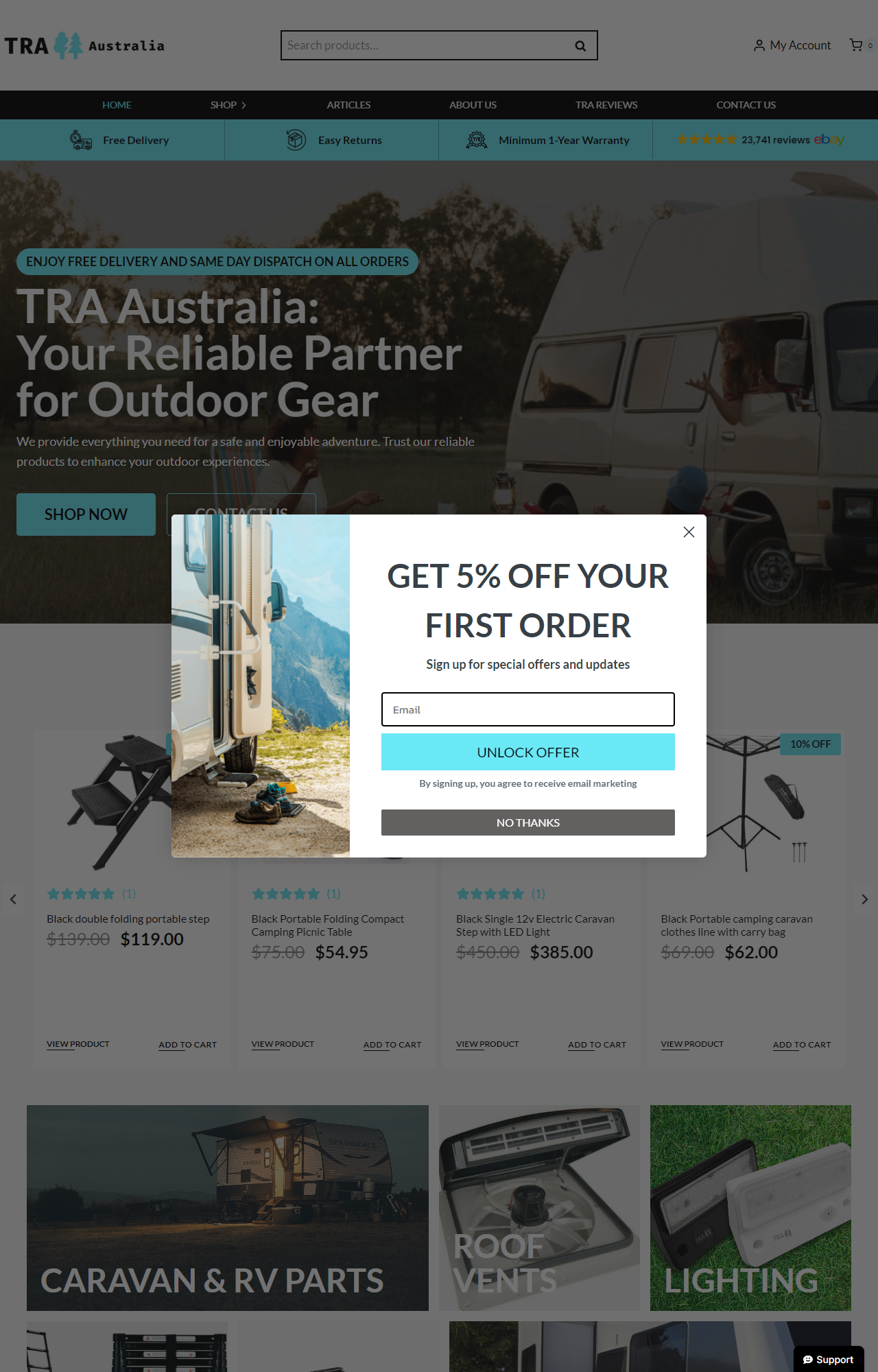
A family-owned caravan and outdoor accessories supplier based in Queensland.
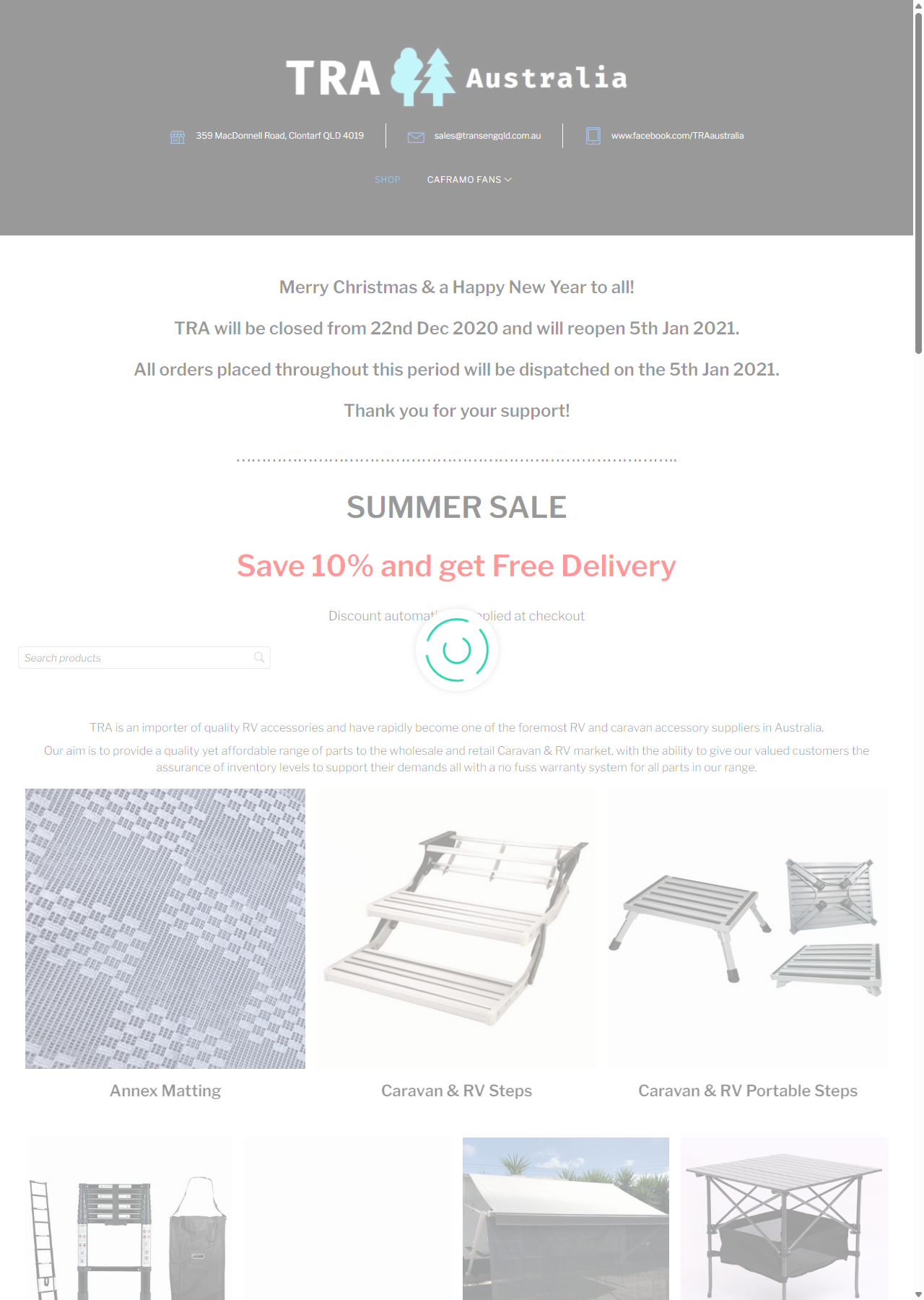
- Navigation: just “Shop” and individual fan model names
- Brand story: none
- Trust signals: none
- Pricing: “Login to view pricing” gated for existing customers
- Holiday notice: previous year’s Christmas message still showing
- Email domain: didn’t match the trading name
- Key pages: no About, Reviews, or Contact in navigation
- Branded homepage with clear value proposition and hero section
- Trust bar: free delivery, easy returns, 1-year warranty, 23,000+ eBay reviews
- Proper menu with 16 categorised sections and descriptive subheadings
- Dedicated pages for About Us, Reviews, and Contact
- Business name formalised with “Australia” suffix for national delivery
A strong ecommerce strategy starts with making your online store represent the same professionalism and trustworthiness that your team delivers in person. This business had great products and loyal customers. The website just wasn’t showing it.
Is your website underselling your business? Let’s talk about it.
From gated B2B ordering to a fully public online store
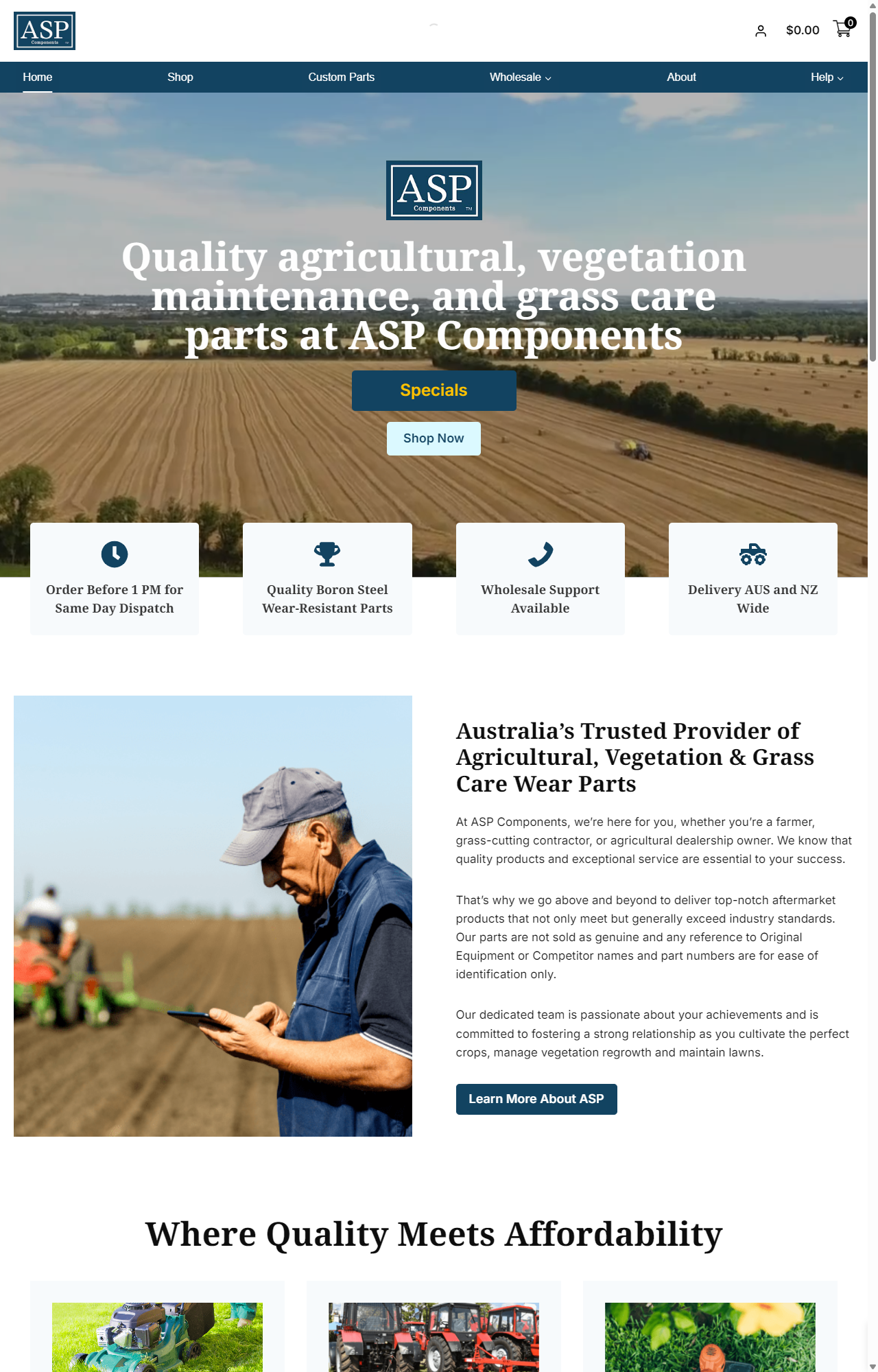
A Queensland agricultural parts supplier serving farmers, contractors, and equipment dealers across Australia and New Zealand.
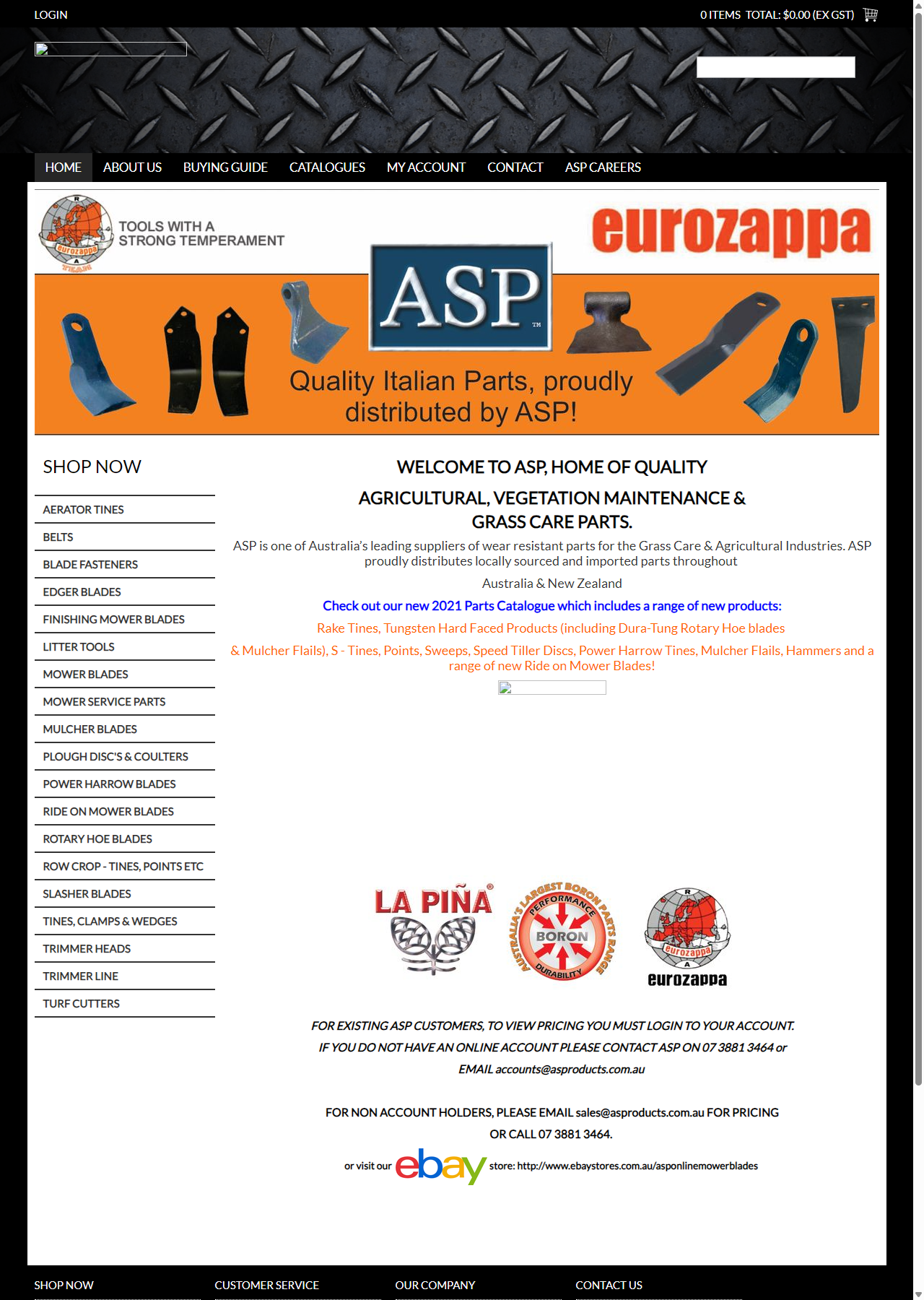
- Pricing: completely hidden behind login wall
- Ordering: phone, email, or login required
- Title tag: simply “Home Page”
- Categories: tabs that search engines couldn’t crawl
- Split channel: eBay store promoted as alternative
- No analytics, no structured data, no mobile-friendly design
- Public pricing with self-serve checkout
- Account creation optional, not mandatory
- Every category became an individually crawlable page
- One channel, one brand (eBay store removed)
- Banner highlighting dispatch, quality, wholesale, and delivery
- Dedicated pages for wholesale, custom parts, FAQs, and reviews
The biggest ecommerce strategy decision for a business with existing trade relationships is often the simplest one. Let people see your prices and buy without calling. When this business opened its catalogue to the public, it unlocked a direct-to-consumer revenue stream that sat alongside its existing trade accounts. Both channels grew.
Running a similar B2B operation? Let’s talk about what this could look like for you.
From one location to five, with structured data to match
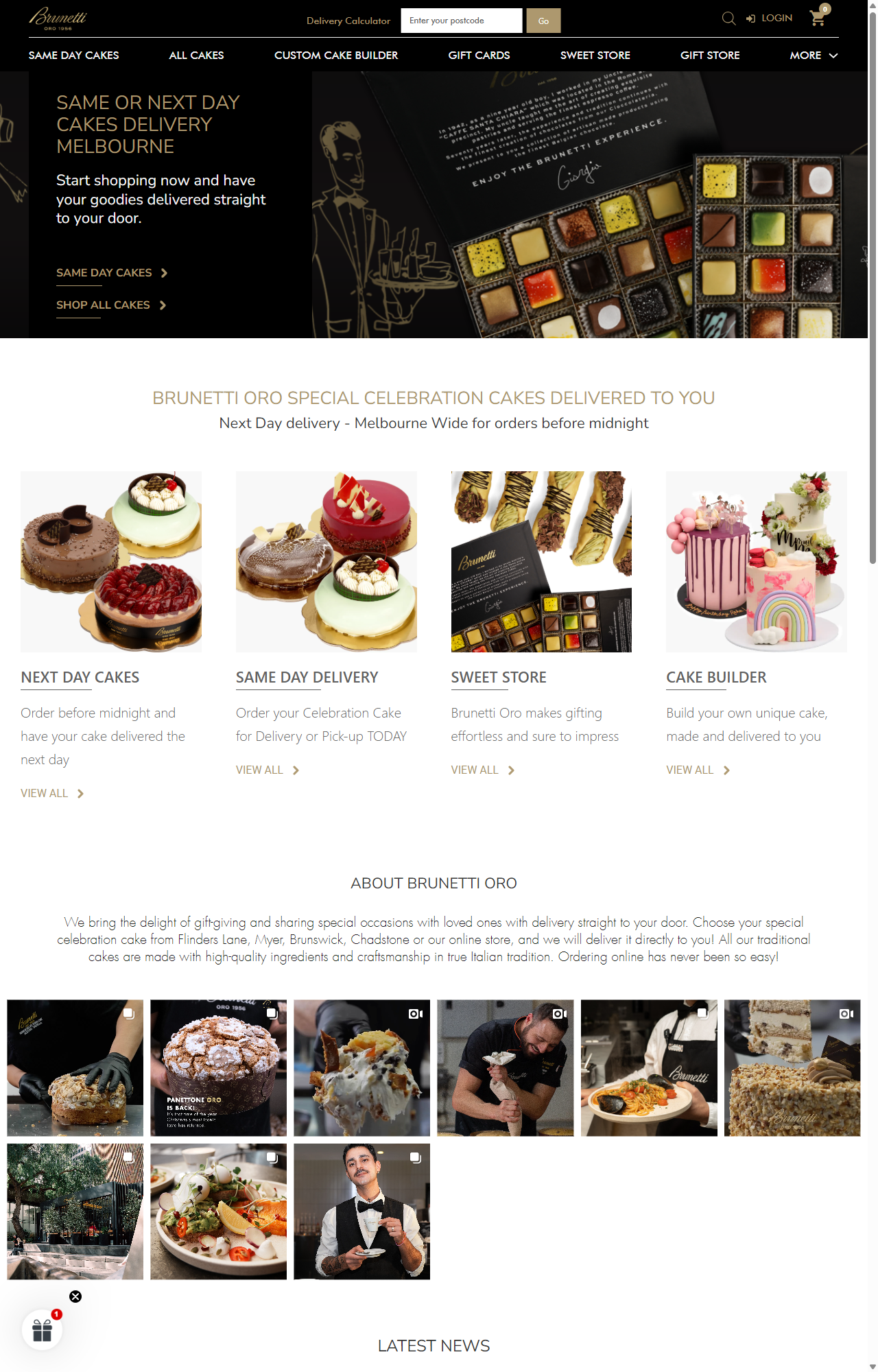
A heritage Melbourne patisserie with roots dating back to 1943.
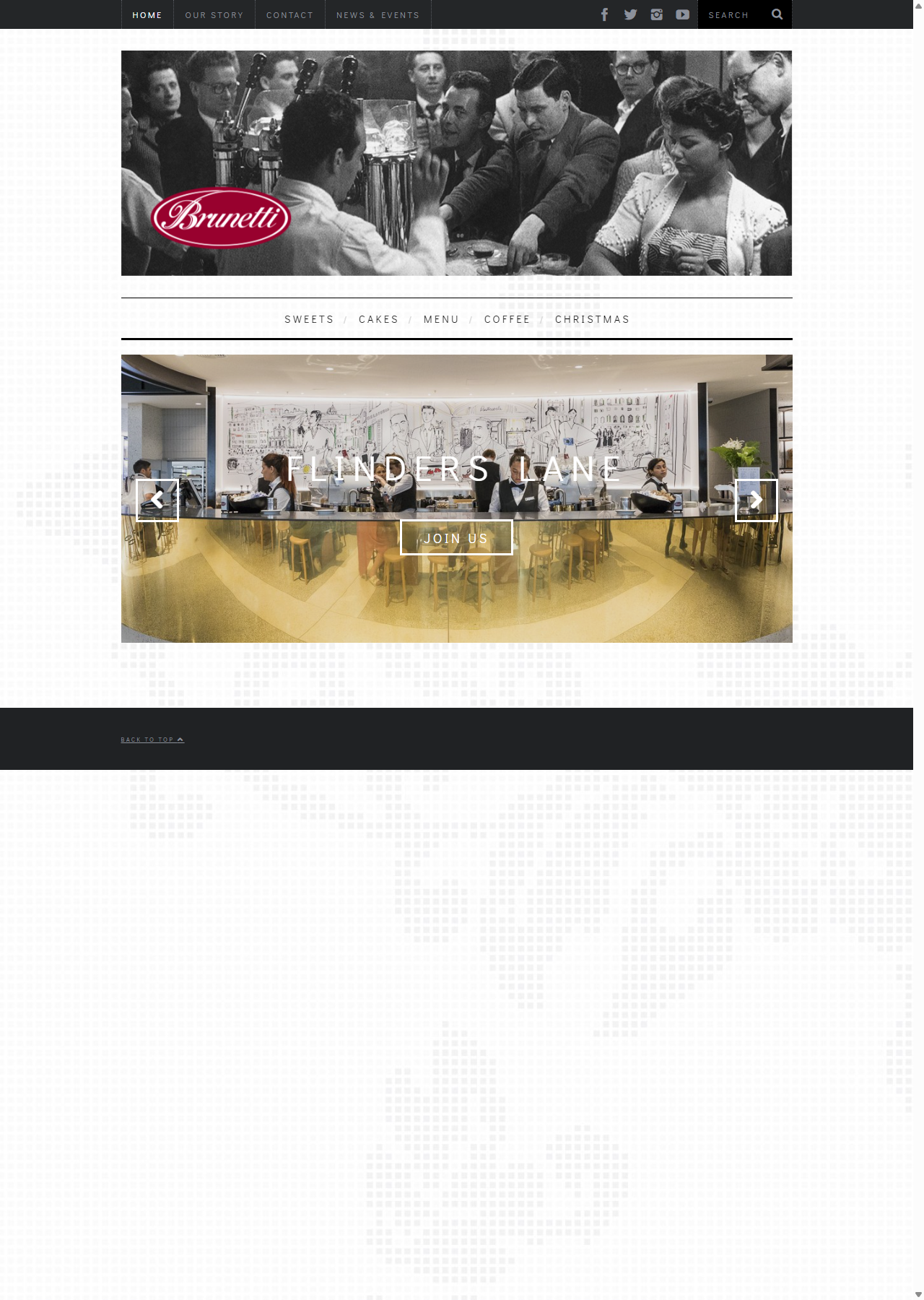
- Homepage heading: “Same Day Delivery” (no brand name)
- Navigation: 4 items
- Structured data: told search engines almost nothing
- Cake builder: listed as “Coming Soon”
- Single location only
- Brand-led homepage with heritage story and product promise
- 14+ navigation items covering cakes, gifts, catering, menus, careers
- Full structured data telling Google exactly what this business is
- Live cake builder with real-time pricing
- 5 Melbourne locations with local search visibility for each
An ecommerce strategy isn’t just about the online store. It’s about making your entire business visible and trustworthy in search results. The code behind the site now tells Google exactly what this business is: an Italian bakery with a real address, phone number, opening hours, and price range. That visibility drove local search results across all five locations.
These three businesses followed the same steps: audit what you’ve got, decide what the online store’s job is, fix the basics before adding complexity, and measure what happens.
7 Pillars of an Ecommerce Strategy That Works With Your Business
Every ecommerce strategy needs these things to actually work. Most guides write them for someone starting from scratch. Here’s how they look when you’ve already got a business.
Customer experience that matches your brand promise
Your existing customers already know what it’s like to deal with you. They know how your sales team answers the phone. They know the quality of your packaging. They have expectations.
Your online store has to meet those same expectations. If your sales team is responsive and knowledgeable, but your website has thin product descriptions and no way to ask a question, you’ve got a disconnect.
Match the online experience to the offline one. Product information should be detailed enough that a customer doesn’t need to call. Live chat or a visible phone number should be available for those who still want to talk. The checkout process should be as straightforward as placing an order over the phone.
Product catalogue strategy: what goes online and what stays offline
Not every product needs to be on your website on day one.
Products that sell well offline and are easy to ship should go online first. Standard items, consumables, and accessories are good starting points.
Products that need configuration, consultation, or custom quoting might need a different approach. A “request a quote” flow can capture the enquiry online while keeping the conversation human.
One agricultural parts supplier we worked with had their entire catalogue behind a login wall for years. Customers had to call or email to see prices. When they opened their catalogue to the public with visible pricing and a self-serve checkout, they unlocked a direct-to-consumer revenue stream alongside their existing trade relationships. That single decision changed the trajectory of the business.
There’s another reason to get your catalogue online properly. Right now, a lot of your product knowledge probably lives in one person’s head. Your best salesperson knows every cross-reference, every compatibility, every “this one fits that one” detail. A good online catalogue captures that knowledge in product descriptions and specifications. It doesn’t replace your best person. It makes sure the business doesn’t fall over when they take leave.
If you’re managing a large product catalogue, auto-generating WooCommerce product descriptions with AI can save significant time while keeping descriptions unique and search-friendly.
Pricing and channel alignment
Pricing consistency across channels is non-negotiable. If a customer sees one price online and gets a different price from your sales rep, trust erodes fast.
Decide early how you’ll handle:
- Public vs trade pricing. Will trade customers log in for wholesale rates? Will public pricing be visible to everyone?
- Volume discounts. Can customers get bulk pricing online, or do they need to call?
- Promotions. If you run an online sale, does your sales team know about it before a customer mentions it to them?
The businesses that get this right set clear rules early. The businesses that don’t end up with customers playing the online store against the sales team to get a better deal.
Search visibility and getting found on Google
An online store that nobody finds is an expensive brochure.
Ecommerce search engine optimisation is different from blogging or informational SEO. Your product pages and category pages need to rank for the terms your customers are searching. That means structured data (the code that tells search engines what your products are, what they cost, and whether they’re in stock), clean site architecture, and content that answers the questions buyers actually have.
The best ecommerce strategy isn’t the most complex one. It’s the one that gets your products in front of the right people when they’re ready to buy. Working with an ecommerce consultant in Australia who understands the local market, logistics, and consumer expectations can save months of trial and error.
For a practical guide to high-converting Australian ecommerce, we’ve written a separate deep-dive on the technical fundamentals.
Ecommerce conversion rate optimisation for considered purchases
Most ecommerce conversion advice is written for impulse-buy products. Add to cart. Buy now. One click.
If you sell products that people research before buying, the conversion path is longer. Buyers want to compare options, check specifications, read reviews, understand warranty terms, and know what happens if they need to return something.
Your product pages need to answer all of those questions without the customer needing to call. Proof matters here. Customer reviews, warranty details, clear returns policies, and product comparison tools all help close the gap between “I’m interested” and “I’ll buy.”
Order fulfilment and post-purchase experience
The sale isn’t the finish line. What happens after someone clicks “buy” determines whether they come back.
Same-day dispatch (for orders placed before a cutoff time), tracking notifications, and a clear returns process are table stakes for Australian ecommerce in 2026. Get these right and you build repeat buyers. Get them wrong and you build one-time customers who leave a negative review.
The post-purchase experience is also where your online store can outperform your offline process. Automated order confirmations, dispatch notifications, and delivery tracking give the customer more visibility than a phone order ever could.
Measurement and iteration
Set a measurement cadence before you launch. Not after.
- Revenue by channel
- How many visitors actually buy
- Top-selling products online
- Where customers are coming from
- Online vs offline revenue mix
- Average order value trends
- How much a customer spends over time
- Return rate by channel
- Total revenue impact of ecommerce
- Cost to acquire a customer: online vs offline
- Year-over-year growth by channel
The goal isn’t to check a dashboard. The goal is to make decisions. If a product category is selling well online, invest in better product photography and descriptions for that category. If conversion rate is low on a specific page, investigate why. Measurement without action is just reporting.
The 5 C’s and the 80/20 Rule: Frameworks That Actually Apply
Two ideas come up a lot when businesses start planning their online store. Both are useful. Both need adjusting if you’re not starting from scratch.
The 5 C’s of ecommerce applied to established businesses
The 5 C’s of ecommerce are Customer, Content, Context, Convenience, and Conversion. Most guides explain them as if you’re discovering your audience for the first time. You’re not.
You already know who buys from you. The question is: how do your existing customers want to buy online?
Translate what your sales team says on the phone into content that works on a screen.
Where and how customers find your store determines what they see first.
If your offline process involves a phone call, the online experience needs to be simpler.
For considered purchases, provide enough information to buy without talking to someone first.
The 80/20 rule in ecommerce: focus on the 20% that drives 80% of online revenue
The 80/20 rule (also called the Pareto Principle) says that roughly 80% of your results come from 20% of your efforts.
In ecommerce, this means:
- 80% of your online revenue will likely come from 20% of your products. Identify those products first and make sure their online listings are excellent.
- 80% of your early online customers will likely come from 20% of your marketing channels. Find that channel and invest in it before spreading thin.
- You don’t need to move everything online at once. Start with the 20% that will generate the most return and build from there.
This is particularly important for established businesses. The temptation is to put your entire catalogue online on launch day. Resist it. A smaller catalogue with great product information, proper imagery, and tested checkout flow will outperform a massive catalogue with thin listings. If you want to improve ecommerce sales in an established business, the starting point is a focused catalogue, not a bigger one.
Ecommerce Strategy for the Australian Market
If you’re building an ecommerce strategy for an Australian business, there are a few realities that generic international guides don’t cover.
Logistics in a big country with a small population
Australia is roughly the same size as the contiguous United States, with about a tenth of the population. Most of that population lives in a handful of coastal cities.
This has real implications for ecommerce logistics. Shipping from Brisbane to Perth can take longer and cost more than shipping from New York to Los Angeles. Offering “free shipping” as a blanket policy sounds good in marketing copy, but the freight cost on a bulky item to a regional address can eat your margin.
Practical approaches:
- Set a free shipping threshold that covers your average freight cost.
- Be transparent about delivery timeframes to regional areas. Customers prefer honesty over a vague “3-5 business days” that actually takes 10.
- Consider a flat-rate shipping model that averages the cost across metro and regional deliveries.
Trust signals that matter to Australian buyers
Australian consumers are increasingly cautious about buying from unfamiliar online stores. With offshore dropshippers and marketplace resellers flooding search results, local credibility matters more than it used to.
Display your Australian Business Number. It’s a small thing, but it tells buyers you’re a registered Australian entity.
If your business is Australian-owned and operated, say so. It matters to a significant portion of your audience.
Afterpay, Zip, and other buy-now-pay-later services are widely used in Australia. Offering them reduces friction.
Australian Consumer Law gives buyers specific rights. A clear, generous returns policy signals confidence in your product.
If you’re looking for hands-on support, our ecommerce team in Melbourne or ecommerce team in Brisbane can help you get these foundations right.
Seasonal patterns and planning
The Australian retail calendar runs on different timing to the northern hemisphere. Getting this right matters for stock planning, campaign scheduling, and content creation.
- Christmas falls in summer. Gift buying overlaps with holidays, beaches, and outdoor activities. Delivery expectations are shaped by heat (perishable goods) and holiday staffing.
- End of Financial Year (EOFY) in June. This is a major sales event for both B2B (businesses spending remaining budgets) and B2C (tax-time deals).
- Back-to-school in late January. Not September. Plan accordingly if your products touch the education market.
- Click Frenzy and Black Friday. Both now operate in Australia, but spending patterns differ from the US. Australian consumers spread their holiday shopping more evenly rather than concentrating on a single weekend.
Build your promotional calendar around the Australian year, not an American template.
How to Build Your Ecommerce Strategy: A Practical Starting Point
If you’ve read this far, you’re serious about getting ecommerce right. Here’s a five-step starting framework you can apply to your business this month.
Audit what you already have
Before building anything new, understand what you’re working with.
- What does your current website look like? Is it a brochure site, a basic store, or something in between?
- Do you have analytics tracking in place? Can you see where your traffic comes from and what visitors do on the site?
- What does your product data look like? Do you have descriptions, images, pricing, and stock levels in a format that could feed an online store?
- Where else do you show up online? Google Business Profile, social media, industry directories?
Write down what’s working and what’s missing. This becomes the foundation for every decision that follows.
Define the role of ecommerce in your business
This is the most important step and the one most businesses skip.
Is ecommerce your primary sales channel or a supporting channel? Is it there to automate reorders? Acquire new customers in new geographies? Give existing customers a way to order outside business hours?
The answer shapes everything. A store designed for reorder automation looks different from a store designed to win new customers through search. Define the role before you brief anyone on the build.
Prioritise products for online sale
Apply the 80/20 rule. Start with products that sell well offline and are straightforward to fulfil. Common consumables, accessories, and replacement parts are good candidates.
Leave complex or high-configuration products for phase two. Those might need a “request a quote” flow rather than an add-to-cart button.
A smaller catalogue done well will always outperform a large catalogue done poorly.
Align your team
This is where most established businesses fail. Not on the technology. On the people.
Brief your sales team before launch. Explain how the online store fits alongside their role. Define how credit works so reps aren’t penalised when a customer orders online. Set shared revenue goals that reward the team for total business growth, not just their individual channel.
If the sales team sees the online store as a threat, they’ll undermine it. If they see it as a tool that helps them, they’ll champion it.
Build, launch, measure, iterate
Launch small. You don’t need every product, every feature, and every integration on day one. Get the store live with your priority products, a tested checkout flow, and proper tracking in place.
Then measure. Look at the metrics from section two: channel mix, new customers from online, reorder automation, order value comparison.
Iterate monthly. Adjust product listings based on what sells. Improve pages based on where customers drop off. Add products and features based on real demand, not assumptions.
Perfection isn’t the goal. Progress is.
Frequently Asked Questions
An ecommerce strategy is a plan for how a business sells products or services online. It covers product selection, pricing, customer experience, marketing, fulfilment, and measurement.
For businesses that already sell offline, an ecommerce strategy goes further. It defines how online sales work alongside existing sales processes, trade relationships, and physical locations. The strategy needs to address channel alignment, team buy-in, and how to measure new revenue rather than just total online sales.
The 5 C’s are Customer, Content, Context, Convenience, and Conversion.
For businesses with existing offline sales, the most important C is Context. Understanding how and why your customers would buy online, versus through their existing relationship with your sales team, determines how you design the entire experience. A customer reordering a regular product has different needs from a new customer researching a purchase for the first time.
The 80/20 rule (the Pareto Principle) means roughly 80% of your ecommerce revenue will come from 20% of your products or customers.
For established businesses adding an online store, this is a strategic tool. You don’t need to put every product online on day one. Identify the 20% of products that will drive the most online revenue. Get those listings right first. Expand from there. The same principle applies to marketing channels: find the one or two channels that drive the most qualified traffic and invest there before spreading your budget thin.
The seven pillars are: customer experience, product catalogue strategy, pricing and channel alignment, search visibility, conversion optimisation, order fulfilment, and measurement.
Each pillar requires specific attention when ecommerce is being added alongside an existing sales operation rather than built from scratch. Pricing alignment between online and offline channels, for example, isn’t a consideration for a business that only sells online. For a business with sales reps and trade accounts, it’s critical.
For an established Australian business, a strategic ecommerce plan typically starts from $5,000 to $15,000 for the audit and strategy phase. Implementation costs vary based on catalogue size, system integrations (MYOB, Xero, or other ERP), and platform requirements, but most businesses invest between $20,000 and $80,000 for a properly built WooCommerce store.
The investment is less about the website build and more about getting the strategy right first. A well-planned ecommerce strategy that launches with 50 priority products and a clear role for the online channel will deliver better returns than a rushed launch with 500 products and no plan for how they fit alongside existing sales.
Most Australian businesses spend more fixing a poorly planned launch than they would have spent on getting the strategy right upfront.
Want to talk through your ecommerce strategy?
If you’ve been through a website project before that didn’t deliver, you’re not alone. We hear that story a lot. That’s why we start with a conversation, not a quote. We want to make sure the plan makes sense before anyone starts building.
You’ve read the guide. You’ve got a sense of what needs to happen. Book a 30-minute chat with John. No pitch. No obligation. Just a practical conversation about where your business is and what the right next step looks like.

